Search

Who's been here?

Travelling to remote and not so remote places

Category

The Trip

(F)Rio de Janeiro – here’s the Cigar!


A dream was about to come true. Rio de Janeiro. Beautiful city of Caipirinhas, Samba, Carneval, Copacabana, Maracana, Sugarloaf Mountain, also of favelas, crime, street kids. The elder Breadbaskets were truly looking forward to getting there. The last day in Quito was really just an extended wait. The overnight flight via Lima to São Paulo and then from there with the equivalent of Easy Jet to Rio was a drag – but eventually we had arrived.
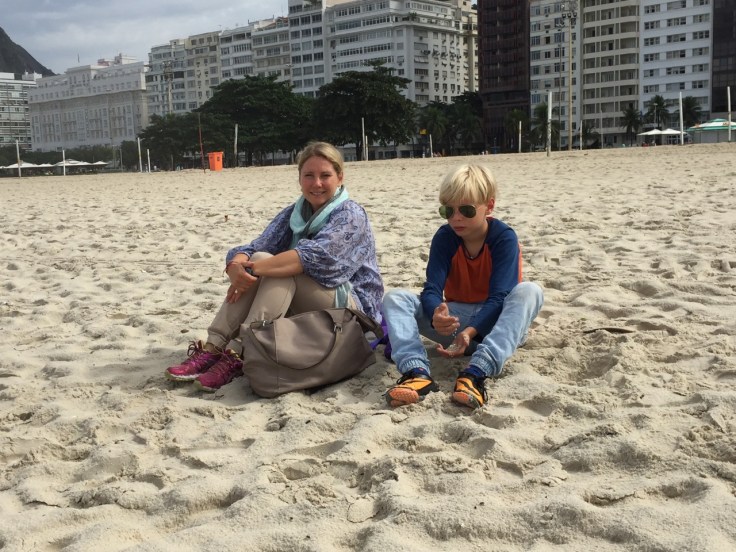
Exhausted family members at the Copacabana
After an overnight flight from Quito via Lima to Sao Paulo we took a domestic flight to Rio. Understandably, the Breadbaskets weren’t at their best when they sat down the first time on Copacabana Beach.

Despite being a tad tired it felt great to be there. I was surprised, though, how cold 20-26° Celsius felt. We rented bikes and cycled from Copacabana to Ipanema beach – the road side thermometer showed 26° and we all felt cold, really cold. But exciting it was. We were incredibly lucky and had a great flat at Copacabana Beach (strictly speaking it was Leme beach, which is the more quiet, North Eastern, part of the beach) – found on Airbnb at pre-Olympic prices. Three bedrooms and a huge balcony overlooking the beach was a nice change to the family rooms we shared on Ecuador (family room seems to be a euphemism for “standard room with too many beds”) – it was fantastic.
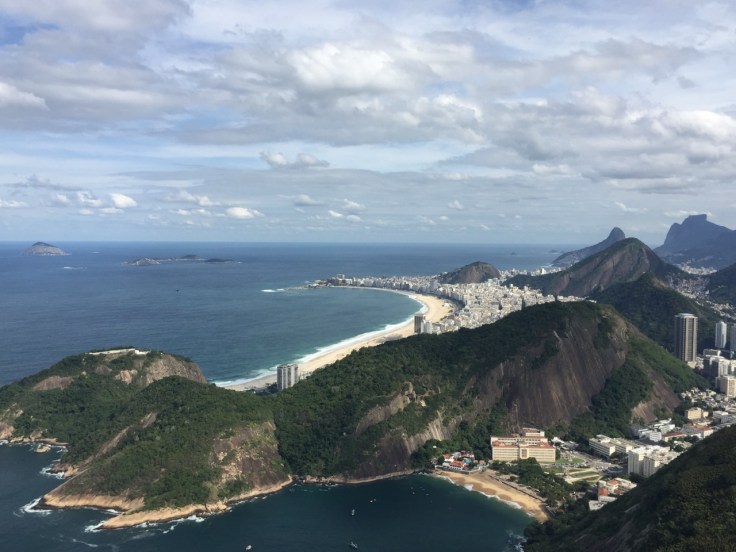
Copacabana from top
Copacabana beach is a dream – smack in the center of Rio. And despite the winter chill at 22°C the footballers, beach volleyballers and body builders were out there having fun.

Rio has got a lot going for it: first – it’s beautiful. Second – a lot of the inhabitants (they refer to themselves as Cariocas) are super nice: easy going, communicative, fun. Other inhabitants seem less nice; however, we didn’t come across any of those. We stayed away from visits to favelas – I guess the inhabitants of Munich’s Hasenbergl (whether it’s reputation these days is deserved or not is irrelevant; I could also use Berlin’s Wedding or Hamburg’s Rahlstedt) wouldn’t be too pleased about busloads of tourists coming out to have a look at them and I guess the guys in the favelas feel the same.
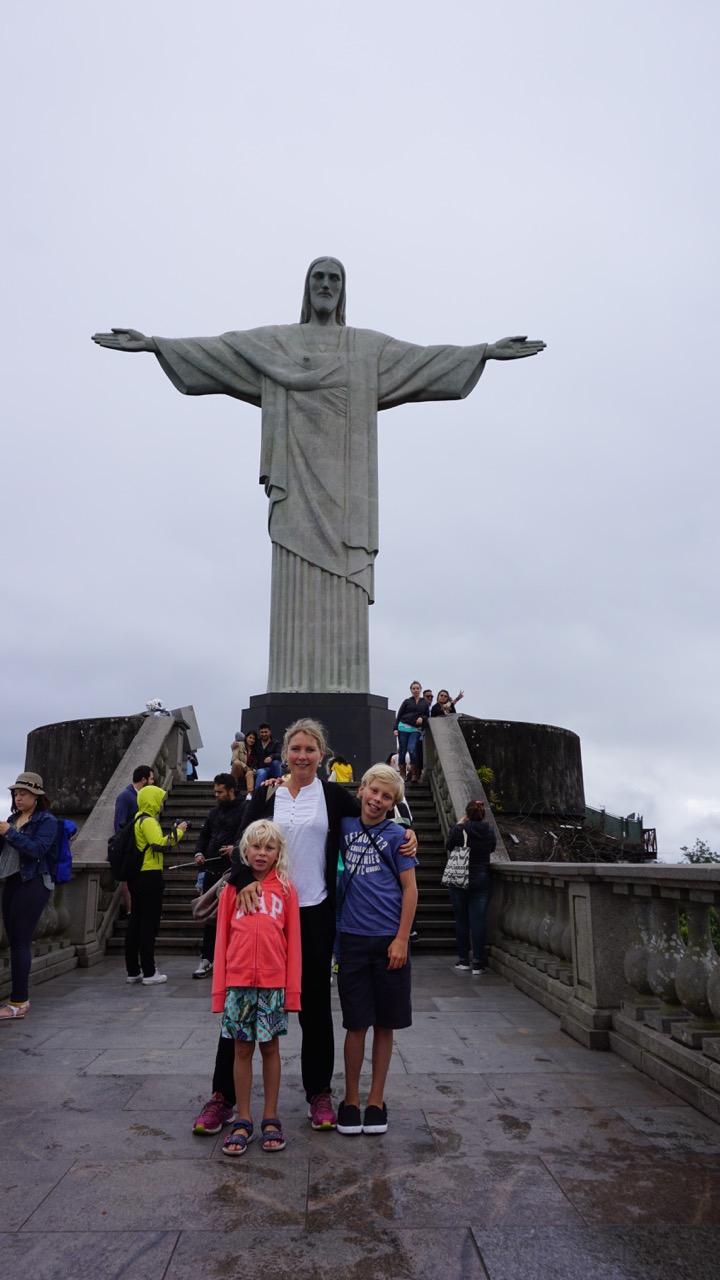
Christ the Redeemer
Christ the Redeemer. Since the weather was rather wintery it wasn’t too crowded up there. The Swedish part of the family felt good about knowing that the cement for the statue came from Limhamn, Malmö, Sweden.

I had a few experiences in my life where getting to an attraction was a bit of a disappointment – it felt like making a tick in a box and not like something really exciting. Not so Rio: Copacabana, Ipanema, Christ the Redeemer, Sugarloaf Mountain – all full successes. Rio is truly beautiful. Largely thanks to its superb geographical situation – the architects, certainly the ones that were responsible for the buildings along the beaches, did their best to neutralise the location advantage. They probably thought: why adding beauty to beauty – let’s have a crack at letting it appear boring.
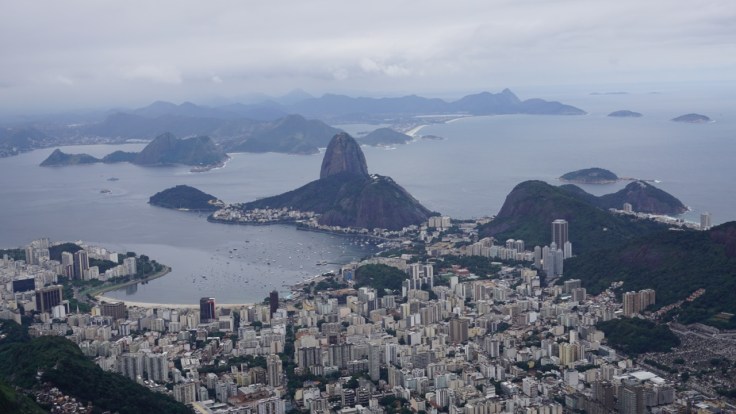
Sugarloaf Mountain seen from Corcovado
Sugarloaf Mountain as Jesus sees it. With that view there’s no way the guy is going to ascend anywhere else.

Unfortunately we will be missing the Olympic Games 2016 in Rio – I am sure it will be an unforgettable event for the athletes, certainly the beach volleyballers, who will fight for gold at the Copacabana.
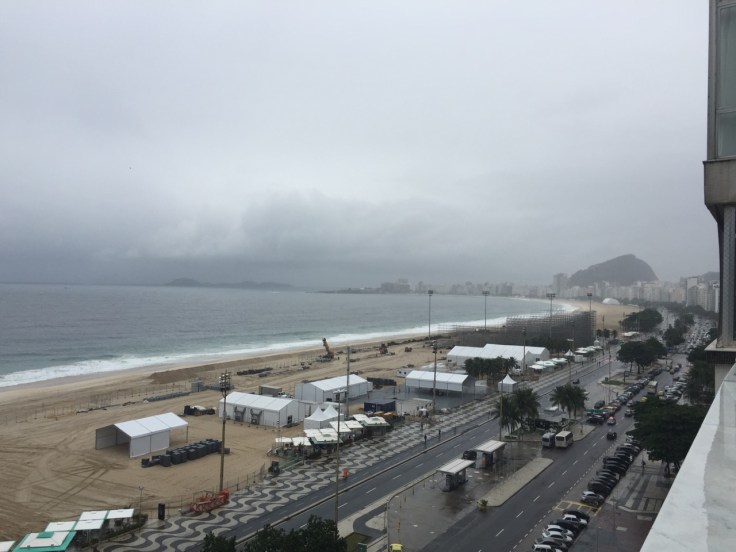
Olympic Volleyball pitch at the Copacabana
Copacabana Beach being prepared for the Olympic Games 2016: must be great for the beach volleyballers to go for gold at the Copa…

So, Rio does it for me (and for the rest of the Breadbaskets – playing football and volleyball on the beaches certainly excited Max, Molly was happy to play in the sand and sipping Caipis at Ipanema was up Anna’s street).

Stunning selection of Bavarian beers in Rio
Rio’s got it all. Even cure for bad cases of homesickness. Since I have not been affected, I’ve kept to the Caipirinhas.

Uh, and one more thing: it seems that the Brazilians hold no grudges:

No grudges held at the Copacabana
Looking at this painting at a wall at the end of the Copacabana I guess the Brazilians came to terms with the World Cup ’14. Probably helped that the Argentinians didn’t get the Cup.

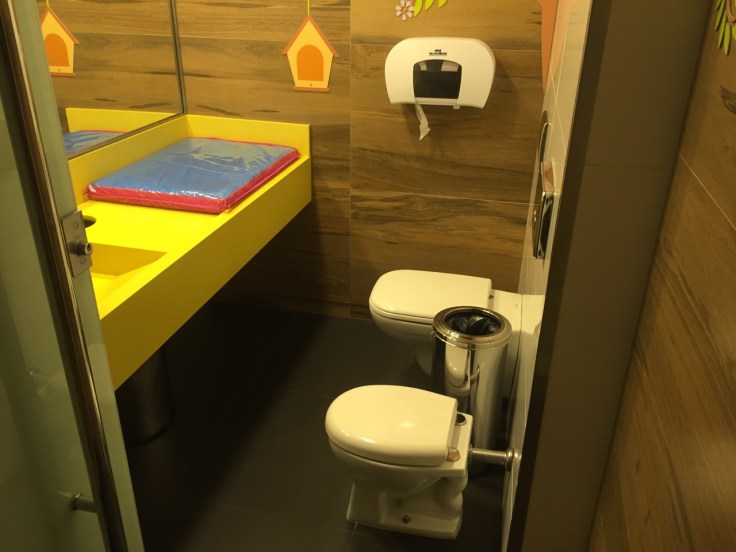
And, finally, I am always surprised when I have to realise how conservative (is that an euphemism for backward?) my home area is – the majority of changing tables there are still in the ladies’ facilities – whereas, at least, this shopping mall in Rio offers these restrooms labelled “Family”:
Family facilities in a mall in Rio
Excellent family facilities at the Rio Sul shopping mal. The toilet in front is a version for the little ones – ideally sized for a 3 year old. Exemplary.

Quito – Close, but no cigar


After having spent almost two months at sea level I was quite excited about the prospect of travelling to an unknown city in the Andean mountains. Quito is beautifully surrounded by mountains, some of them exceed 4000m; the city itself is located just a few kilometres South of the equator at an altitude of over 2800m. Old Quito is a UNESCO world heritage site – all indicators that we should have fun. The arrival process, which in some places can be a pain in the backside (whoever arrived anywhere in India will know what I’m talking about), was super smooth: no taxi haggling, the car looked as if it was going to make the 40km into town, the driver spoke English well enough to have a conversation, the road into town was well built and devoid any potholes – it felt good. We rode through the narrow streets of old Quito towards our hostel – one beautiful colonial building after the next, the hostel was very nice – it felt excellent. Since we arrived late in the afternoon we didn’t have time to see much, but just settled and went towards the main square  (Plaza Grande) to the restaurant we’ve selected through the usual process of “lonely planetting” and being “trip advisored”. We were, of course, aware, that choosing a restaurant in the most touristic spot in the most touristic area, albeit recommended by fellow travellers, was risky business. But again, it started well: the place was located in a beautiful building (a former bandit’s a.k.a. Archbishop’s palace), the waiter was pleasant enough – so far so good.

Hasta La Vuelta Senor
The restaurant we’ve visited on our first night in Quito: Hasta la vuelta, Señor – the name is based on a horny priest, who used the church’s cross as his stepping stone to meet the girls. As the story goes, the big boss told him off and henceforth he’s been an asset to society (the priest). Didn’t happen with the priests that had a go at the little boys, lately, though.

Heck, I am rambling here, but I’m trying to figure out why a city, which has got everything going for it Continue reading “Quito – Close, but no cigar”

Colonial Cuba


Indeed there is a backlog of impressions from Cuba! Regular blog updates require an internet connection and in this respect Cuba still lives in the Cold War era. Obtaining an internet card (that buys you an hour of service) is a bureaucratic process that would make a Russian state employee proud. Once a card is purchased, you have to find a wireless “hotspot” to get online. A sure spot is around high-end international hotels, where you at night find a gathering of locals whose smartphones light up the dark like fire flies.

Whereas the cold wind of communism still can be felt in Havanna, the bittersweet smell of colonialism still hangs over Trinidad in the south of Cuba. Some say time has stood still here, and it’s a beautifully preserved colonial town but it felt a little bit like an open air museum.

Nevertheless we housed in a lovely Casa “Juan Carlos y La China” where colonial furniture was still in use and three stories towered over an inner courtyard. From there we had beautiful views over Trinidad and the Escambray Mountains. And the Mojitos were delicious!

Casa Juan Carlos y La China
Many old colonial buildings are still in the hands of the original families

Trinidad’s heyday was in the 18th and 19th century when wealthy families traded in slaves and sugar. When slave trade stopped and the sugar business petered out, Trinidad went to sleep for a 100 years and the buildings remained the way they were. Until the 60’s…

Continue reading “Colonial Cuba”

A Rum diary


I love Cuba! It’s a friendly, feisty, charismatic place! Like an old woman, worn down by age and hardships, a bit rough around the edges, but still not having lost the sparkle in her eyes! A place where an underdog can win an impossible fight.

The Bay of Pigs was named in the good ole’ times when starving pirates came to the natural harbour to stock up on food from a local pig farmer. After Che and Castro released Cuba from “decadence and corruption”, the place again got on the international map in 1961 when the Americans decided to support, and train, a group of counterrevolutionary Cuban ex-pats who would invade their home country and crush the communist dogs. But the invasion was an embarrassment, Kennedy got nervous, withdrew his support and unceremoniously left the soldiers at the mercy of Castro (who later traded them for medical supplies and food). The Cuban American love affair was over and Castro and Che promptly got in bed with the Soviets instead.

Bay of Pigs invasion info
The invasion plans were anything but secret. Kennedy had apparently exclaimed: “Castro doesn’t need spies, all he has to do is read the news!”

Continue reading “A Rum diary”

You say turtle, I say tortoise


For approximately 43 years I have lived a lie. My beloved childhood pet turtle Mohammed Moshe (M.M) wasn’t actually a turtle at all but a tortoise. I now stand corrected in the knowledge that a turtle lives in water and a tortoise on land. And Galapagos has an abundance of both kinds. It’s truly breathtaking how close you can actually come to the animals and how many you see in the wild.

Wild tortoise and the breadbaskets
A lonesome tortoise and the Breadbaskets in Urbina Bay, Isabela

A very large population of giant tortoises can be seen on Santa Cruz island. The ranch next to the El Chato Reserve got so fed up with the tortoises breaking down the cattle fences on their strolls, that they finally gave up and are now letting the tortoises roam around freely on the grounds. Naturally, what they lost in cattle breeding, they won in tourist contributions!

Continue reading “You say turtle, I say tortoise”

The Enchanted Islands


The Galapagos Islands were on top of Anna’s and my list when it came to planning this trip. We’ve stayed for two weeks with a five day cruise at the beginning and some free travelling at the end. The cruise was an interesting experience – we had the feeling that we were bringing down the average age on the boat by approximately 20 years (talk about stereotypes). That said, it was a marvellous experience with excellent, knowledgeable guides, some great snorkelling with sea lions, turtles, rays and sharks and a lot of excursions at places which we otherwise wouldn’t have reached. The whole archipelago is a national park with limited access for visitors, who are only allowed to visit designated locations and only in company of an official Galapagos tour guide (they call them naturalists there). Watch the little clip to get an impression of what we could experience.

Obviously, the individually perceived highlights varied: Molly loved the baby turtles, Max fell in love with surfing and Anna and I were awed by being able to see (strange) wildlife so close across the board. Despite a few hundred years of contact with human beings the local animals have managed to maintain their fearless approach to life – on one hand due to the fact that hardly any animal has natural predators in the area, on the other hand it seems that the numerous visitors, which have been streaming in over the past 10 years (estimated about 200,000/year), have managed to behave themselves. That leaves hope.

In the jungle, the mighty jungle…


Traveling South America and not going to the Amazonian rainforest felt like a no-go. Being on a budget but still wanting to avoid hoards of tourists, we decided to enter the Amazon basin in Ecuador and not the often preferred route through Brazil. The Napo Wildlife Center in Yasuni National Park offered a perfect family solution: comfortable eco-lodge owned by the Yasuni community, daily trips into the depth of the rainforest to ensure lots of wildlife spotting and respectful and knowledgable guides. Top Choice!

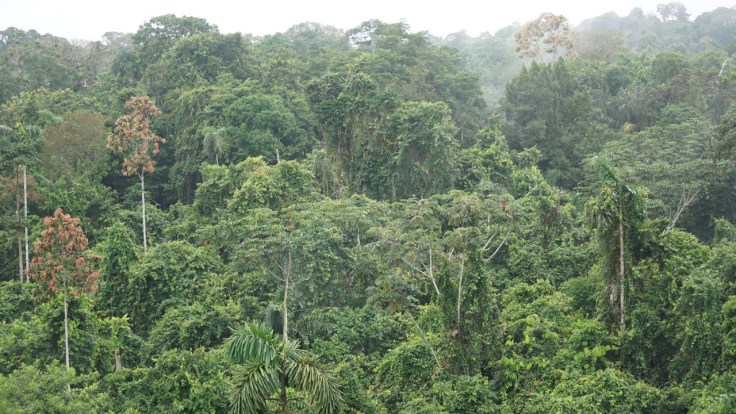
Tree canopy
Eco-tourism is a way to prevent the rainforest from being exploited – and destroyed – by the oil companies

Already on the first day we spotted a scary looking caiman in the lake on which the lodge was situated, as well as Giant River Otters looking for fish. The caimans looked peaceful enough but four years ago, when swimming in the lake was still allowed, a caiman attacked two guests. Although they both (miraculously) survived, the poor woman’s head had been stuck in the caiman’s jaws and she needed extensive surgery. Ouch!

Caiman
The lake around the lodge has plenty of caimans, hence swimming is (now) forbidden.
Giant river otter
Giant River Otters are dangerous predators although feeding mostly on fish (and not little blond girls)

Early morning every day, we were taken by paddle boat along the black water creeks surrounding the lake. It was wonderfully calm and peaceful to float along slowly in the early morning light. Even the kids kept quiet to listen to the sounds of the rainforest!

Continue reading “In the jungle, the mighty jungle…”

Marlboro woman


After the hot and busy Havanna it was nice to breath in the fresh air of Vinales, a town in the eastern part of Cuba. Vinales is a really cute little town where everyone seems to have caught on to the (only?) way for ordinary Cubans to make an extra dollar – renting out a room in your house. You are allowed to rent out a maximum of two rooms to a seemingly fixed rate, and many people make the most of the opportunity. At least Castro has not managed to kill the entrepreneurial spirit of his people!

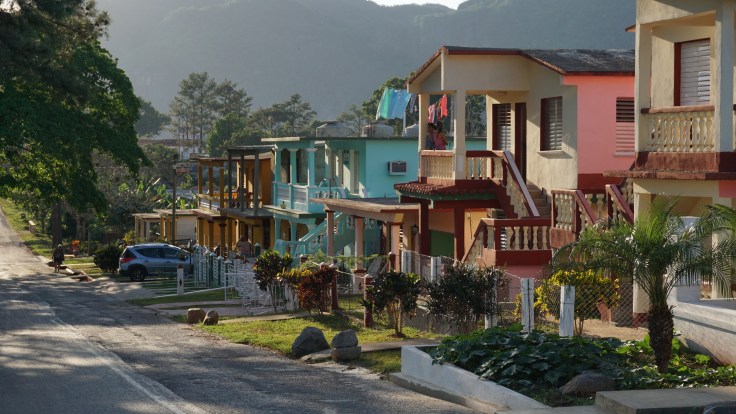
Vinales street view
For app. 30 CUC (Cuba Convertible Peso aka foreign money), the equivalent of $30, you can rent a room at somebody’s house and live together with the family. Nicer way to experience Cuba than staying at a hotel.

Vinales is surrounded by breathtaking mogotes, residual limestone formations, and endless tobacco plantations. How best to experience this wonderful landscape? By horseback of course! Yes – my dear cousin Eva – I mounted a horse and headed off into the sunrise! Who would ever have believed THAT?!

Marlborough woman
“I’m a poor lonesome cowgirl…”

Continue reading “Marlboro woman”

The Classic Cars of Cuba


Ooph – over two weeks in Cuba generated quite a backlog of experiences to report on! That meant that we were over two weeks offline, since getting an internet connection in Cuba is not exactly straight forward. And getting a working internet connection is pretty much a lottery – when I eventually was sitting on a workstation in an internet cafe it took me forty (40) minutes to complete our online check-in for the flight back to Panama City.

In the meantime we have arrived in Quito, where internet connections exit, but the quality of the connection is somewhat late 90’s. Enough rambling, backlog #1:

I’ve heard a lot about classic American cars in Cuba and expected to see the occasional vehicle. I was not prepared for the fact that virtually every car that was on the road in 1959 when Castro took over is still in use! At times it felt as if more than half of the cars on Cuba’s streets where classics. Interspersed with the occasional Lada, probably a subsidy from the happy times when the Soviet Union was Cuba’s main supporter, and a few Japanese and Korean automobiles. We’ve seen hardly any luxury cars – I recall a newish Mercedes E Class and an Audi A4.

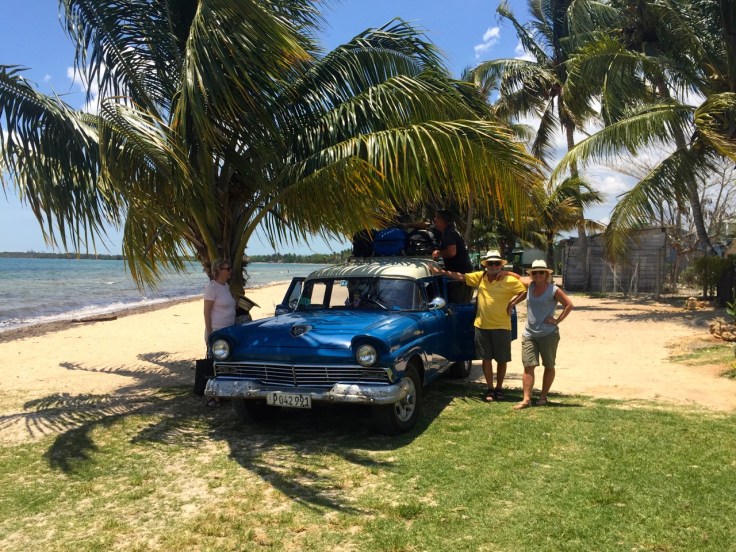
Classic Car XIII
Our trusted Ford, which brought us from the Bay of Pigs to Trinidad and from there to Varadero. Ford chassis, Fiat engine, Mercedes gear box, Hyundai transmission – Cuban mechanics are creative in working with what they’ve got.

All the cars are in full use. Most cars date from 1952-1959, Continue reading “The Classic Cars of Cuba”

Blog at WordPress.com.

Up ↑