Who cares about pokemons, when you can go around the world collecting volcanos!
Starting at Volcan, the beautiful rain- and cloud forest area of Panama, a ring of old volcanos protectively surround coffee farms and plantations. The dormant Volcán Barú (3,477 m) was a muscle-man of a volcano, not just quietly and gracefully trickling out lava – oh no – he was hurling big chunks of rocks several kilometers. The Hulk Hogan of volcanos! Even on the other side of the valley, from the cosy cafe at Jansons coffee farm, you could see large blocks of stone thrown there by the explosive volcano.

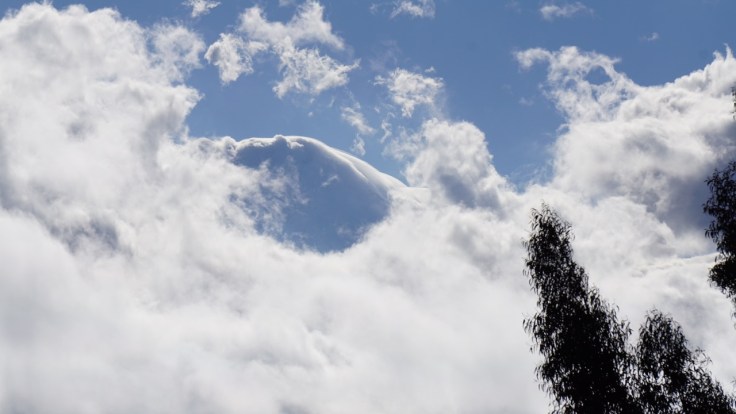
Travelling south from Central America, over the continental divide (where the water flows either into the Atlantic Ocean or the Pacific), into South America and Ecuador, we reached the Andes. Pichincha (4,784 m) is an active volcano and lies in Quito’s backyard. With the TelefériQo you can reach almost 4,000 m and either hang with the kids at the amusement park or continue to the peak by foot. (Why you need an amusement park at 4,000 m is another question…). However, a measly 4,700 m wasn’t enough for us, we wanted to see Cotopaxi (5,897 m) and booked ourselves into a Hacienda at its foot. Since Cotopaxi is highly active, with the last eruption in August 2015, it is not safe to climb but at least we got a glimpse through the clouds one early morning.
On a wonderful day we took our rented compact car (read: tiny) and drove through the beautiful country side to Quilotoa. There we climbed into the crater of the 3,914 m high Quilotoa volcano. After the massive eruption about 800 years ago, the volcano collapsed to form a beautiful, and according to legend bottomless, crater lake.


The Galapagos Islands are entirely volcanic. Some of the islands are so barren that nothing grows, on others nature has found an astonishing way of creating life. It was exciting to see how the lava had flown, feel the difference of pa hoi hoi and a a lava under your feet and see how some eruptions had blown half the mountain to smithereens. Some islands were pure black lava just stained white in some places by Blue-footed Booby-poo. This was Thor at work: one big showcase of what a super-power of a God can create.

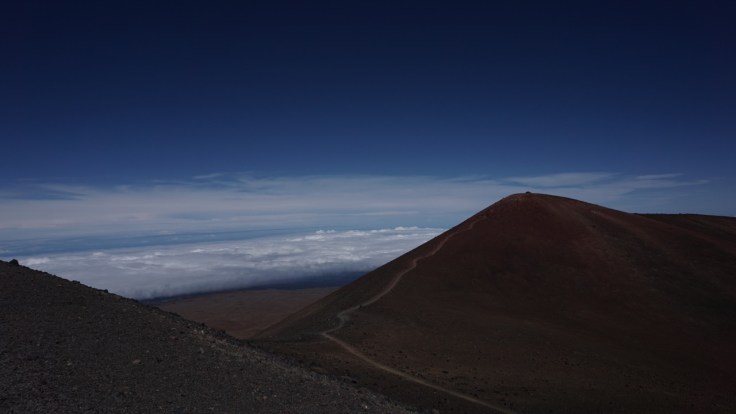
Same origin but a world apart were the Hawaiian Islands. Oahu is the oldest of the Hawaiian volcanic islands and is actually already being eroded back into the see. Oahu has the extremely green and lush hills that you associate with Hawaii, here nature found the lava soil favourable and plant life flourished. The Island of Hawaii (Big Island) is in stark contrast with Oahu. At Mouna Kea (4,205 m) not a single bush or green seed has had a chance to grow. Mars-like indeed! Big Island is still impressivly growing. Since the eruption in 1985 of Kilauea (1,247 m), which is still very much ongoing, the lava flow into the water has extended the island with 200,000 to 500,000 cubic meter per day (in total 2 sq km since 1994). This volcano is not just a big colourful glitzy show-off but relentlessly hardworking and never-stopping at creating new land. Very un-american somehow…

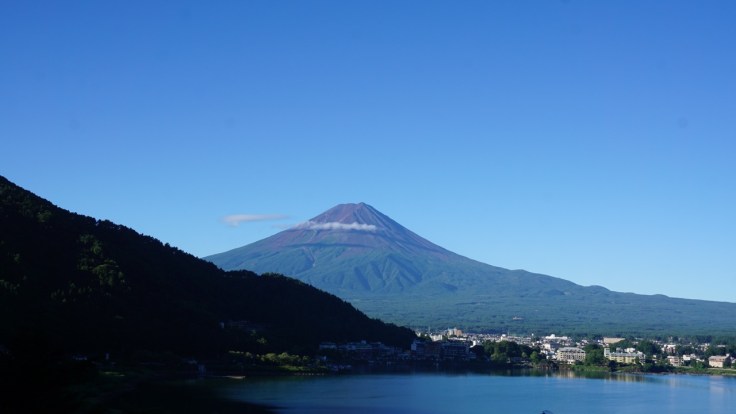
Last but in no way least in our volcano treasure hunt was Mount Fuji (3,776 m) in Japan. Mount Fuji looks like a volcano should do with one prestine and intact funnel-shaped peak. This is the most romantic and mystical of all the volcanos and we would have loved to do the 2-day climb and see the sunrise from the top. Like a beautiful geisha raising her hands to the sun in a graceful salut, it is breathtakingly exquisite. To me, this is the Grande Dame, the pièce de résistance in our collection. With all the mighty power of the others, this is the one that does it for me…
 Who's been here?
Leave a comment